FrontierSmith: Synthesizing Open-Ended Coding Problems at Scale
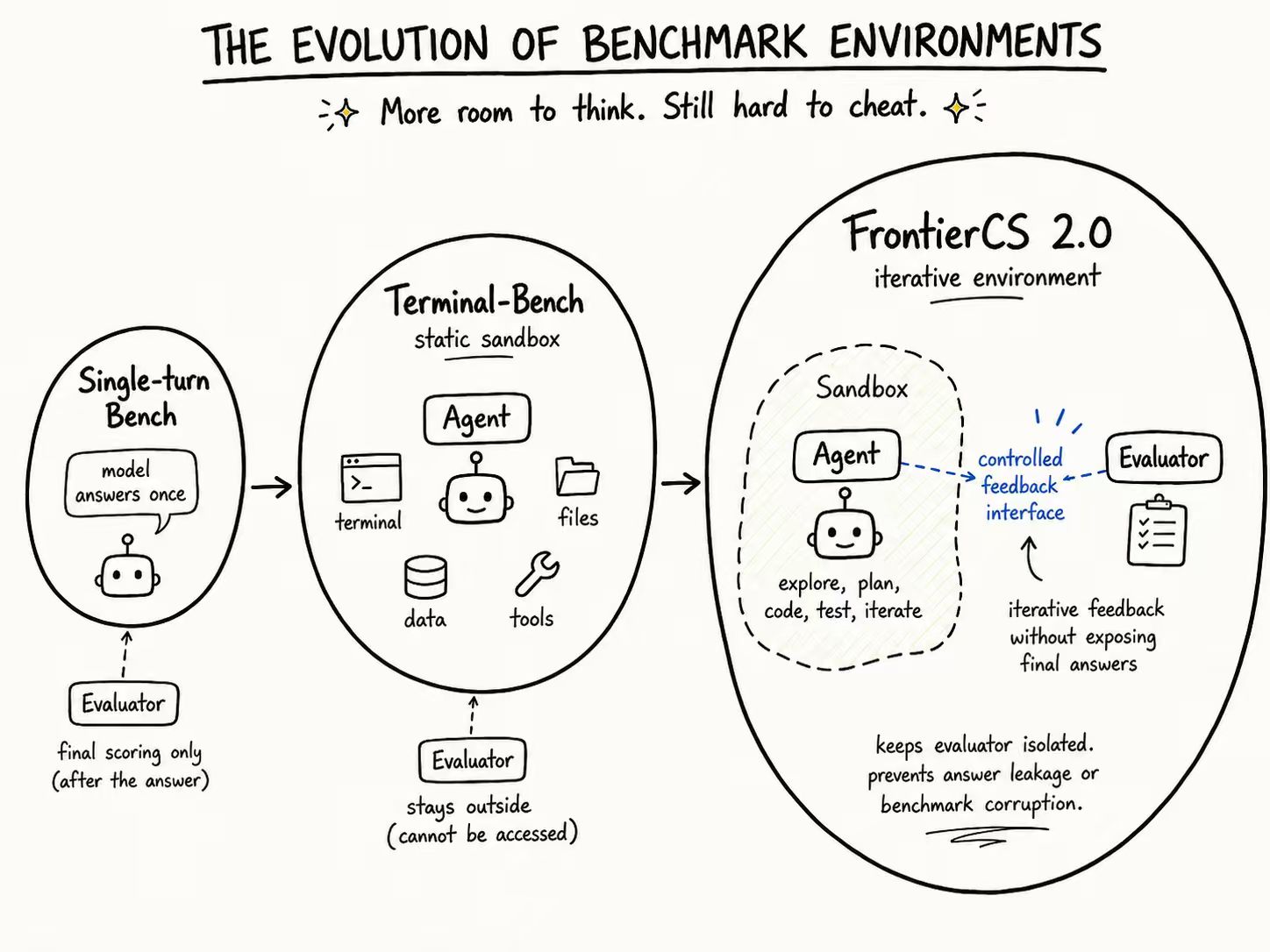
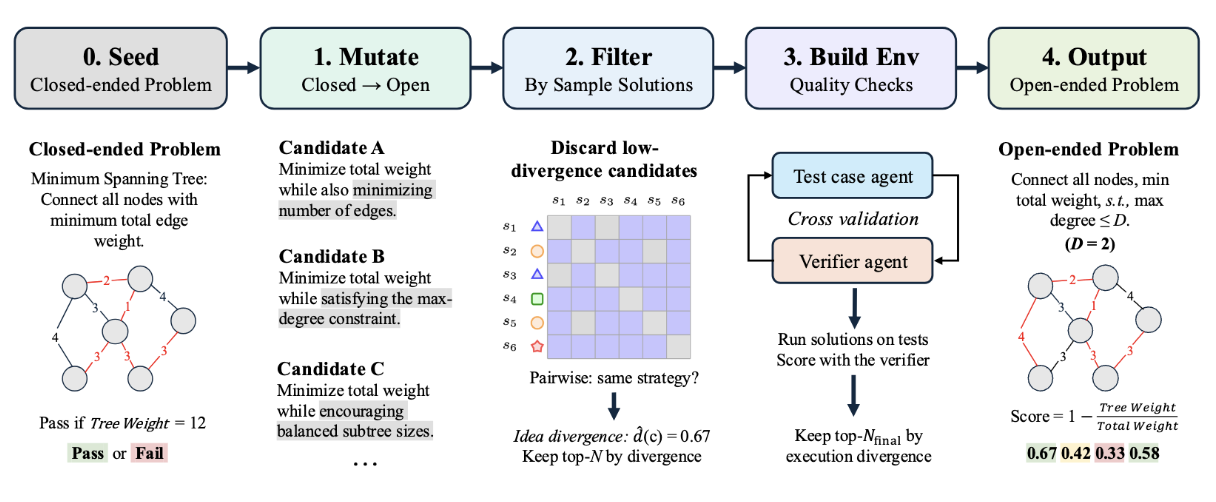
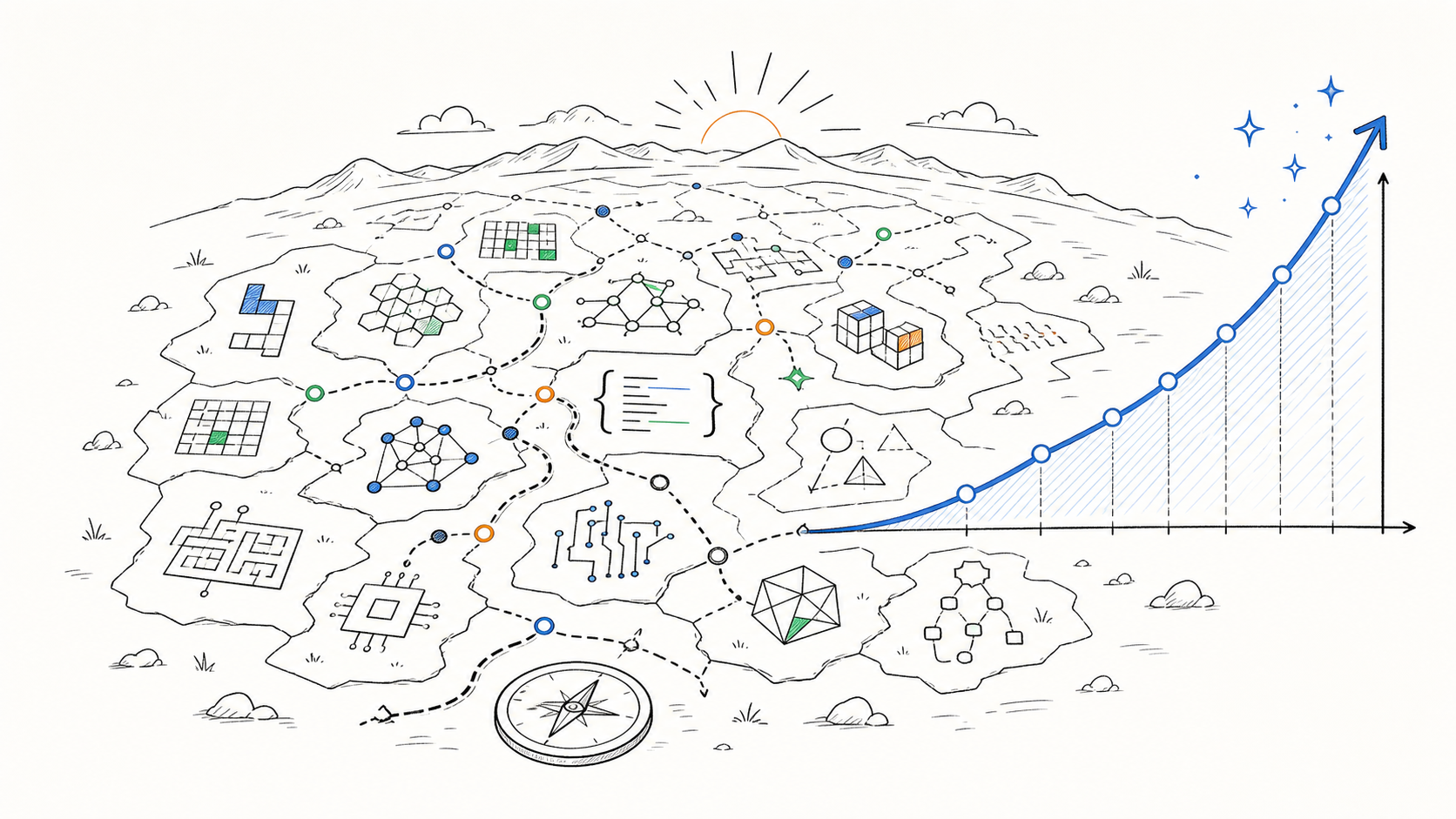
We release FrontierSmith, a system that converts closed-ended coding problems into open-ended optimization tasks for training long-horizon coding agents.
Read more →Year
8 posts published in 2026.
We release FrontierSmith, a system that converts closed-ended coding problems into open-ended optimization tasks for training long-horizon coding agents.
Read more →
We integrate FrontierCS into Harbor and release a preview long-horizon agent leaderboard on 178 open-ended algorithmic tasks. Kimi K2.6 and Claude Code Opus 4.7 show similar headline capability, but very different failure modes.
Read more →
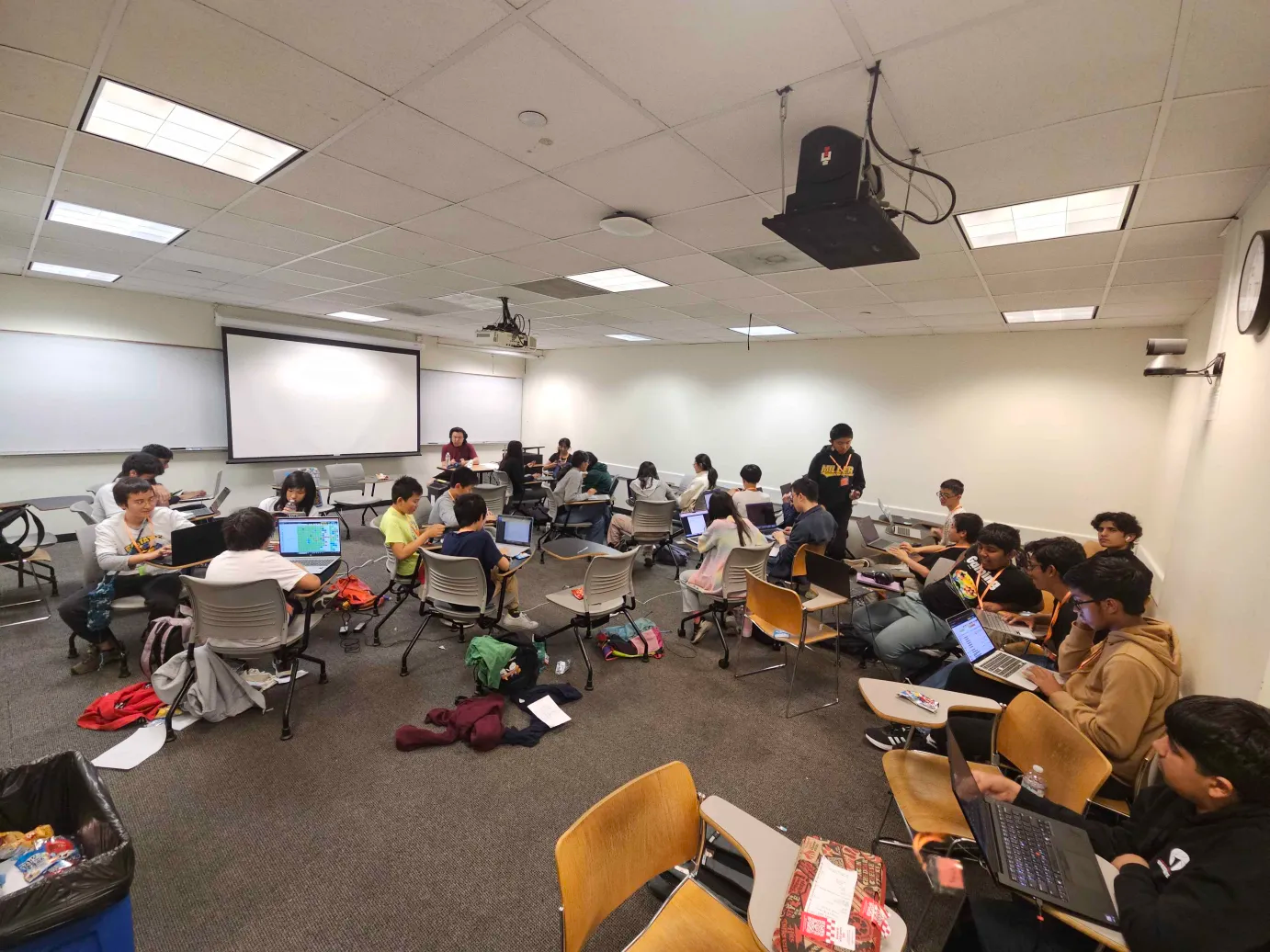
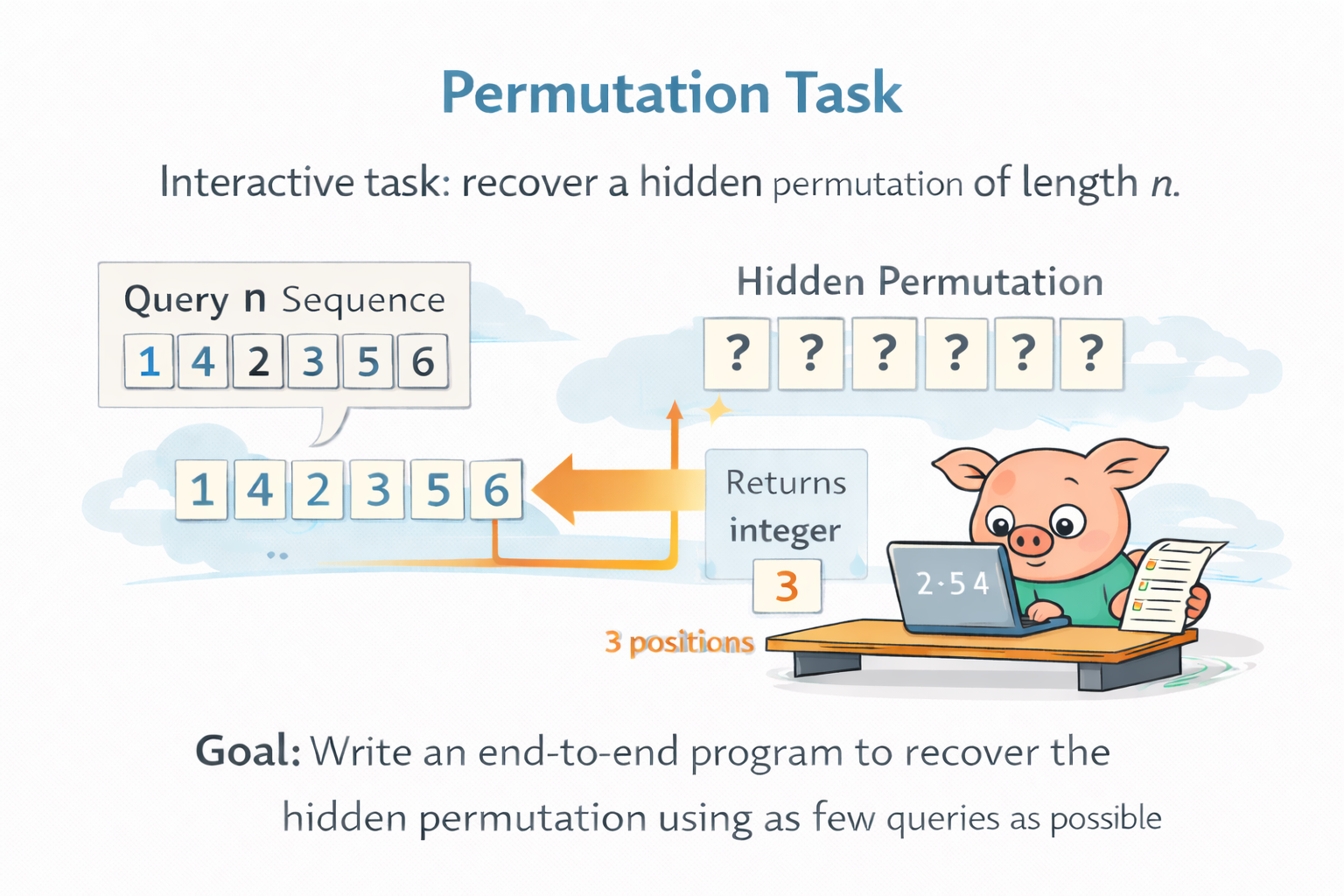
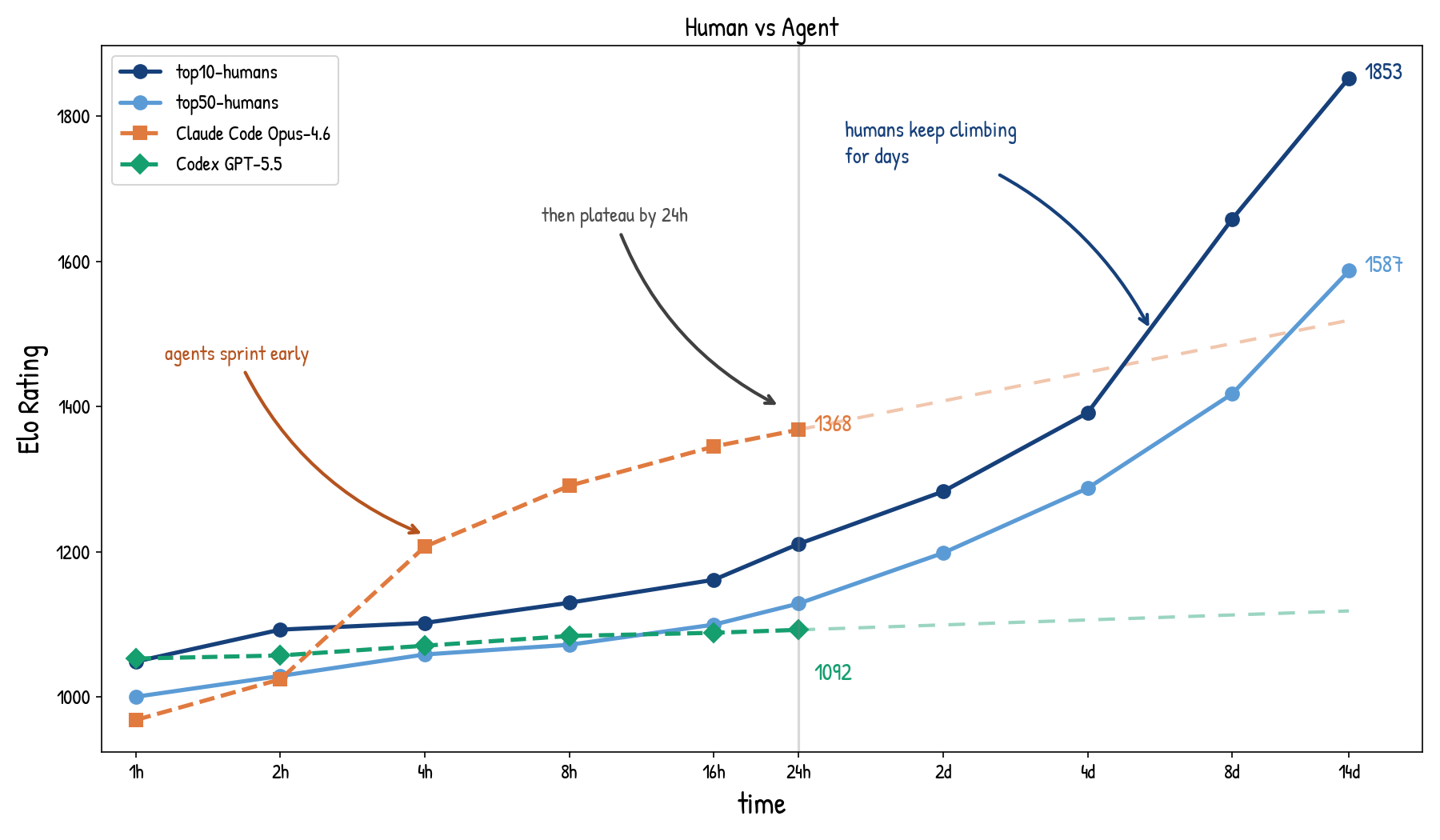
We placed an open-ended optimization problem in CALICO, UC Berkeley's official programming contest. To score, you had to beat a frontier AI. Out of 2,000+ contestants, only one submission surpassed the strongest AI agent.
Read more →
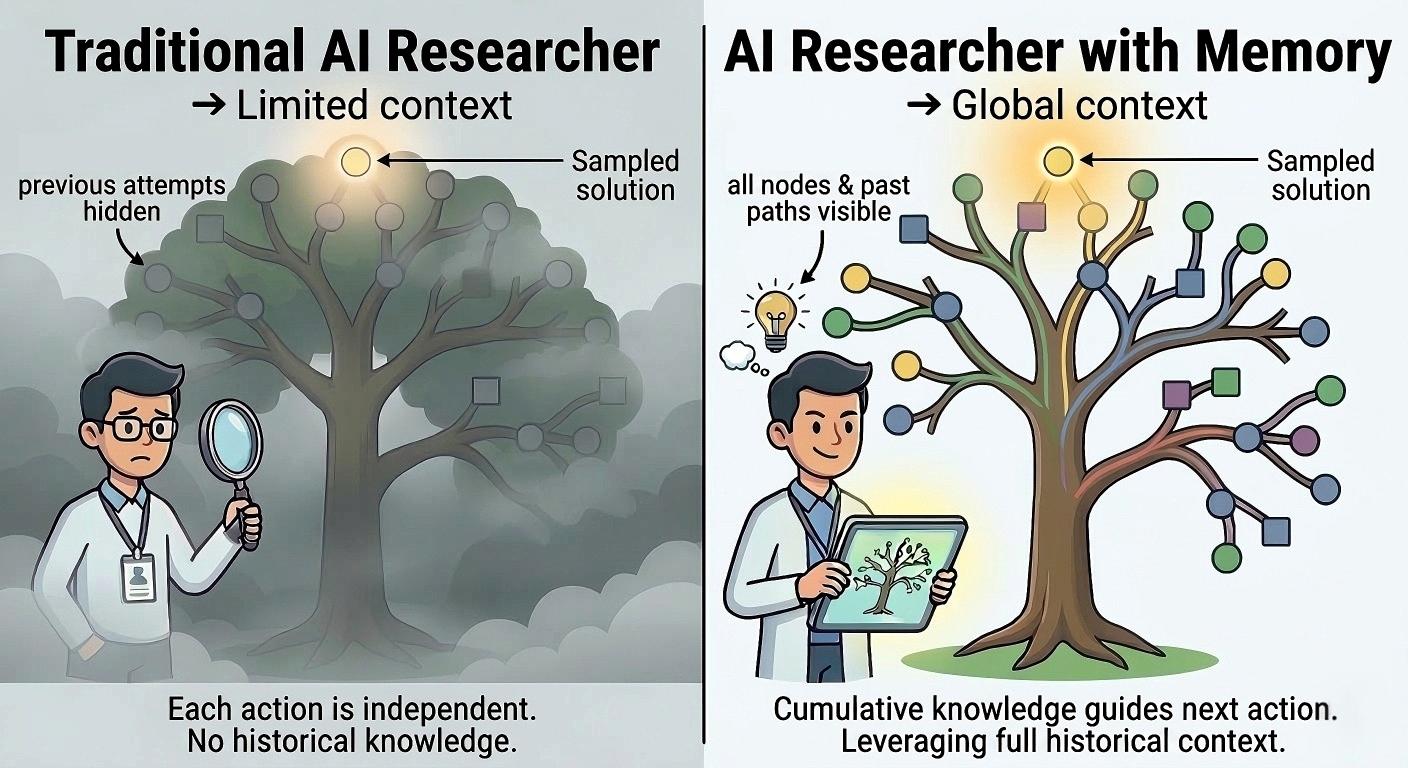
Frontier-CS is an open benchmark that facilitates evaluation of evolving agents. We demonstrate how researchers build ALMA to automatically learn continual learning AI researchers on Frontier CS.
Read more →
Evolving agent systems are advancing fast, but evaluation hasn't kept up. We show how Frontier-CS enables comprehensive, large-scale benchmarking of evolving agents—moving beyond small case studies for comparison at scale.
Read more →
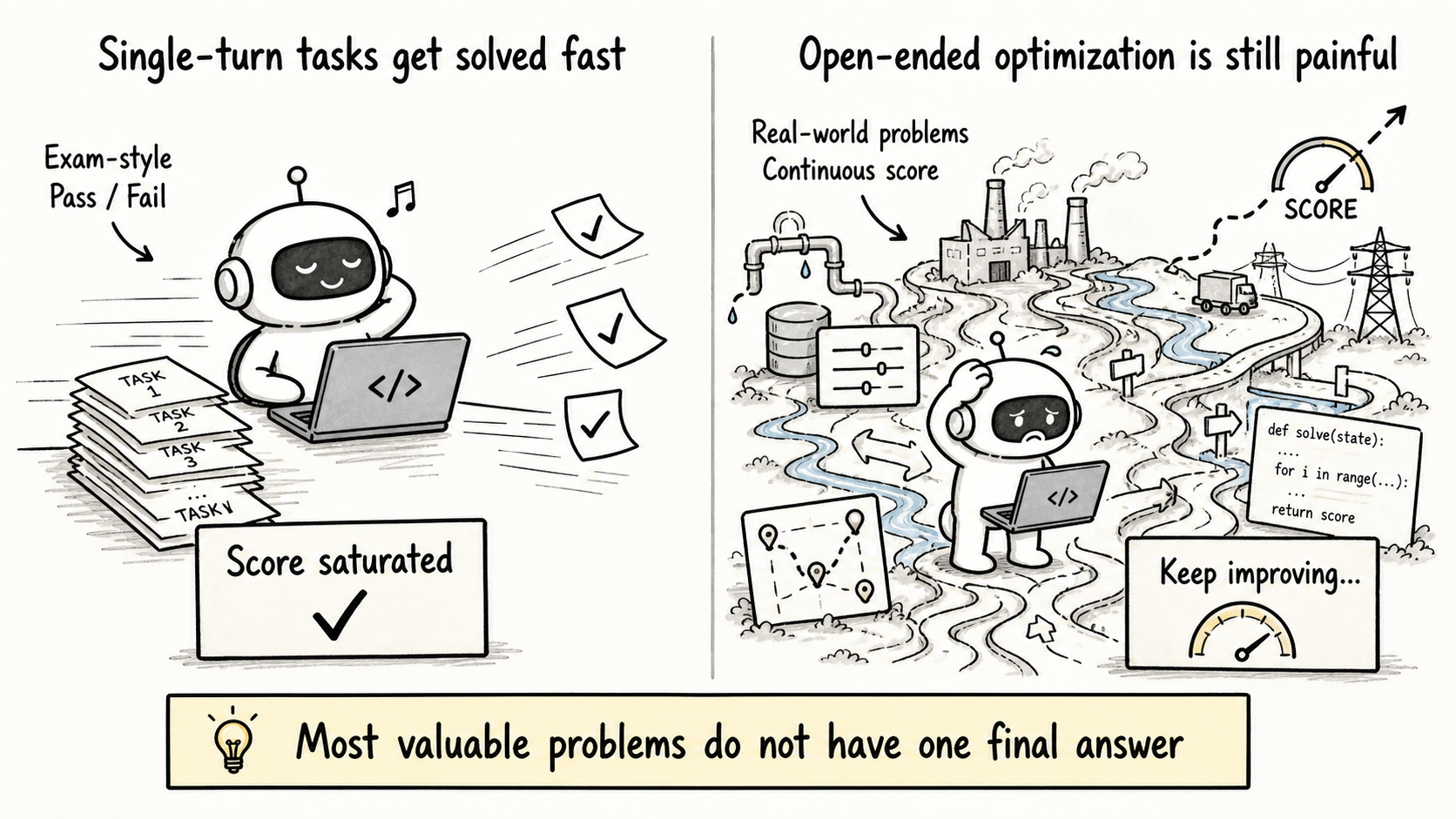
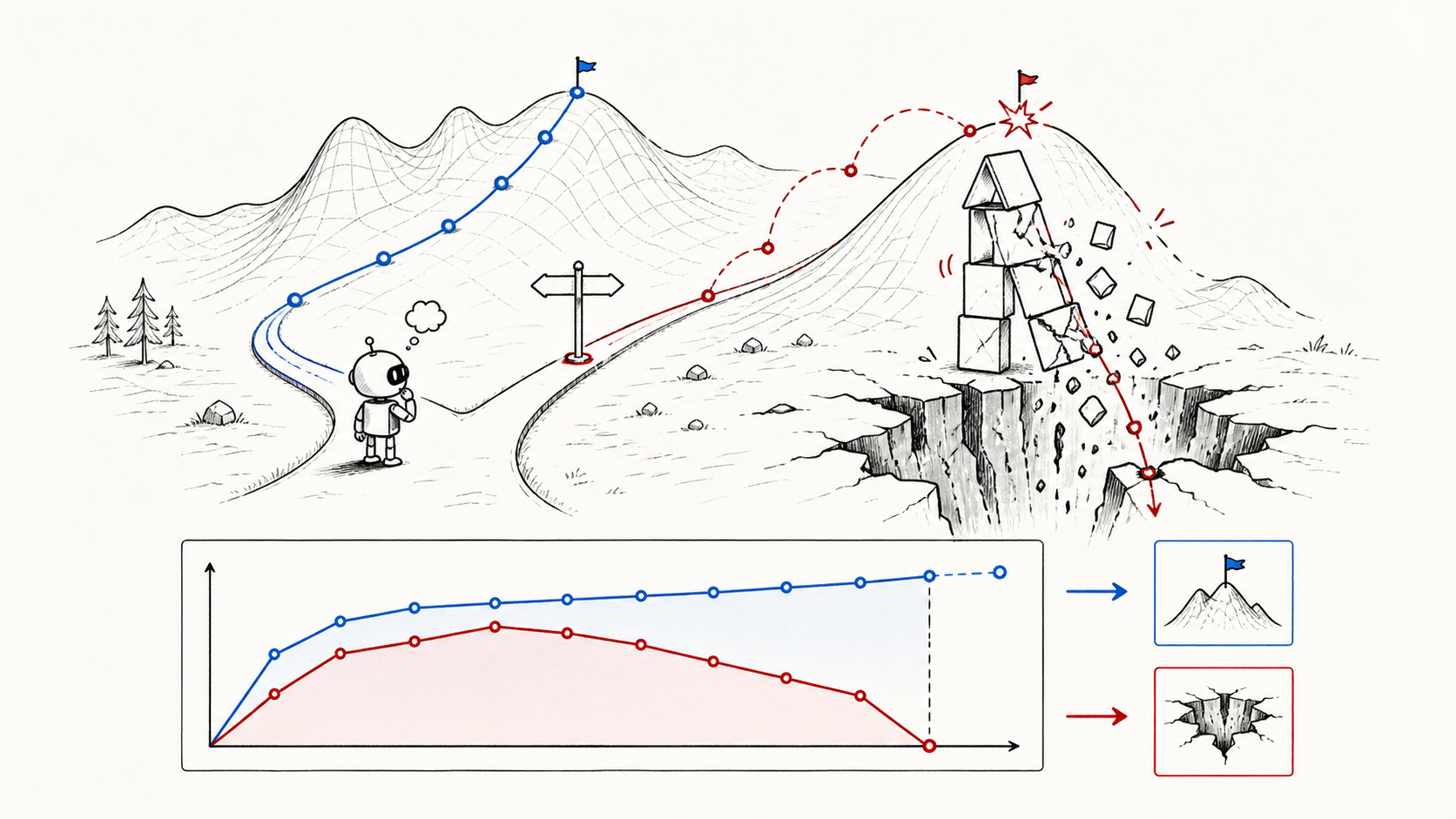
Modern LLMs claim superhuman algorithmic abilities, but what happens when there is no strict verifier? We analyze how multi-turn 'optimization' in Frontier-CS exposes the cognitive ceiling and catastrophic failures of AI in open-ended problem solving.
Read more →
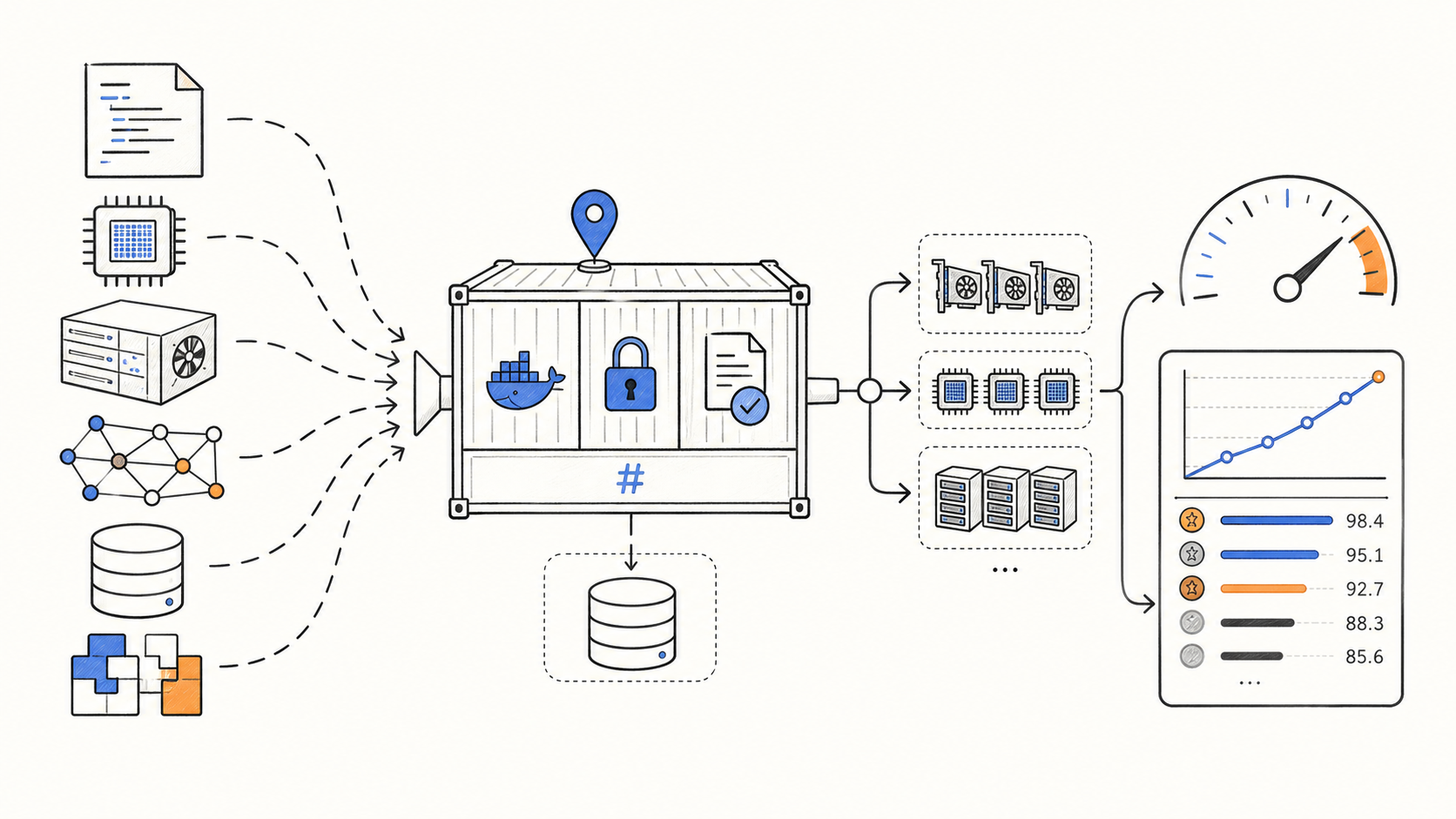
Frontier-CS scores solutions on a continuous scale across heterogeneous hardware. This post explains the evaluation architecture behind the leaderboard: hash-based resume, resource-grouped clusters, pinned environments, and the challenges ahead for agentic submissions.
Read more →We are releasing Frontier-CS 1.0, a major update to our open-ended Computer Science benchmark. This release expands Frontier-CS to 240 tasks across both the algorithmic and research tracks. We also introduce a new Elo-based leaderboard, along with full execution traces of model solutions to enable deeper analysis and reproducibility.
Read more →Follow our work